Professional Mould Removal Eastern Suburbs
If you're serious about mould.
Mould isn't something to simply wipe away, paint over or treat with a quick spray. If mould is growing inside your home, there is a reason for it.
We are a full-service, IICRC/S520-accredited mould remediation company providing professional mould inspection, diagnosis and remediation services throughout Sydney's Eastern Suburbs.
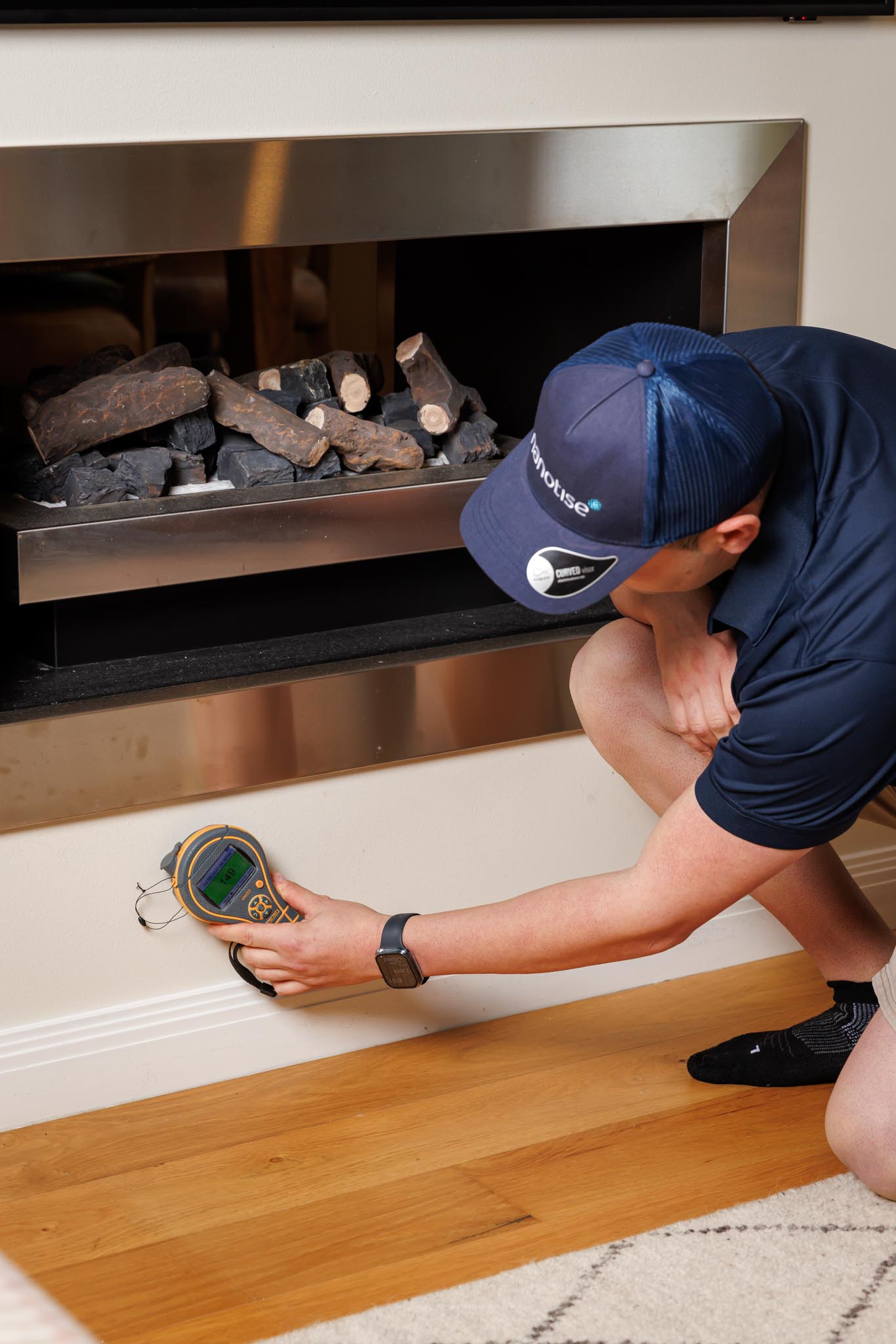
If you're serious about mould, don't compromise — start with Nanotise.
Mould deserves to be taken seriously
Mould is more than an unsightly patch on a wall or ceiling.
Persistent mould growth is usually evidence of an underlying moisture problem — such as water ingress, plumbing leaks, condensation, inadequate ventilation, rising damp, subfloor moisture or defects in the building envelope.
Moisture is getting where it shouldn't — and unless the source of that moisture and the full extent of the contamination are properly identified and treated, there is a very real risk the mould will return.
Left unresolved, moisture and mould can contribute to deterioration of plasterboard, timber, flooring, cabinetry, carpets, finishes and other building materials. Hidden moisture can also allow contamination to develop inside wall, ceiling and floor cavities where it may remain undetected.
There are also potential health implications associated with damp and mouldy indoor environments, particularly for susceptible occupants.
That's why simply treating what you can see may not solve the problem.
The visible mould can be the symptom. The real problem may be located somewhere you can't see.
A proper diagnosis changes everything
At Nanotise, we take a different approach.
Our objective isn't simply to make visible mould disappear.
It's to understand why it is there, determine how far the problem extends, develop the right remediation strategy and help you achieve an outcome designed to last.
Successful mould remediation begins with understanding why the mould developed in the first place.
A Nanotise assessment goes beyond looking for visible mould. Depending on the circumstances, our inspection may include:
- Detailed visual inspection of affected and surrounding areas
- Moisture mapping using professional moisture-measuring equipment
- Thermal imaging to identify temperature and moisture anomalies
- Assessment of likely water-ingress pathways and moisture sources
- Consideration of ventilation, condensation and humidity
- Surface or air sampling where appropriate
- Investigation of adjoining rooms, cavities and building elements
- Invasive inspection where necessary and authorised
Test when it adds value. Investigate where the evidence leads.
Mould testing can be useful, but testing alone doesn't solve a mould problem.
The more important questions are often:
Where is the moisture coming from?
How far has it travelled?
Which materials have been affected?
Is there contamination hidden within the building?
What needs to happen to prevent the problem recurring?
Nanotise combines inspection, moisture assessment, building knowledge and, where appropriate, sampling and laboratory analysis to build a more complete picture.
The result is a diagnosis that can form the basis of an effective remediation plan that addresses causes — rather than simply treating the most obvious symptoms.
Why Eastern Suburbs homeowners choose Nanotise

Sydney's Eastern Suburbs contain a diverse mix of older homes, apartments, renovated properties and architecturally designed residences — often with complex combinations of building materials, previous renovations, coastal exposure, subfloor conditions and water-ingress vulnerabilities.
When you're dealing with a valuable home, and looking after the health of your family, a superficial approach to mould isn't good enough.
Nanotise provides a professional, evidence-led approach focused on identifying the problem, understanding its cause and determining the appropriate path to remediation.
Common Mould Problems in Eastern Suburbs
Coastal exposure, dense terrace and apartment living and older building stock create specific mould challenges that require local expertise.
Many homes are built on sandstone, which acts like a giant sponge, drawing water to the surface through capillary action; older homes with degraded damp-proof courses or moisture barriers may result in rising damp and other forms of elevated moisture inside the home.
Eastern Suburbs properties face constant salt-laden ocean breezes that accelerate moisture damage and create ideal conditions for mould growth.
- Beachfront apartments with persistent humidity from ocean proximity
- Salt corrosion of window seals allowing moisture infiltration
- Balconies and external walls bearing the brunt of sea spray
- Underground garages and storage areas trapping coastal moisture
The Eastern Suburbs' iconic terraces and high-density apartment blocks present ventilation challenges that promote mould.
- Terraced houses with shared walls limiting cross-ventilation
- Basement and ground-floor apartments with rising damp
- Older apartment blocks with inadequate exhaust systems
- Rear rooms and bathrooms with minimal natural airflow
Specialist knowledge of Eastern Suburbs's environmental conditions and building styles.
Nanotise Kingsford — serving the Eastern Suburbs for over 16 years
From discovery to verification
Dealing with a significant mould problem can be confusing.
There may be questions about the building, moisture sources, contaminated materials, remediation, repairs and what needs to happen before the home can safely move to the next stage.
Nanotise can guide you through the process from beginning to end.
Discovery
We inspect the property to establish what is happening, where mould or moisture may be present and whether further investigation is required.
Discovery. Diagnosis. Remediation. Verification.
One professional process, with Nanotise navigating you through every stage.
Specialised Eastern Suburbs Services
01Professional remediation is about more than removing mould
Once mould contamination has been identified, the way it is removed matters.
Disturbing contaminated building materials without appropriate controls can release mould spores, fragments and contaminated dust into the surrounding environment — potentially spreading contamination into previously unaffected parts of the home.
Nanotise remediation protocols are developed with reference to recognised IICRC standards and the ANSI/IICRC S520 Standard for Professional Mold Remediation.
Depending on the project, controls may include containment of the affected area, air-pressure management, HEPA-filtered air management, controlled removal of contaminated porous materials, HEPA vacuuming and detailed cleaning of remaining surfaces.
The objective is not merely to remove what looks mouldy.
It is to remediate the affected environment in a controlled manner while minimising the risk of secondary contamination.
02Working with your builder — not against them
Mould and water-ingress problems often overlap with building defects and renovation works.
That's why Nanotise regularly works alongside builders and other trades professionals who understand that mould contamination and moisture issues need to be addressed before affected areas are simply closed up, repaired or renovated.
We can investigate and document the mould and moisture issues, develop the remediation protocol and undertake the specialist remediation work.
Your builder can then address the building defects, water-ingress issues and reconstruction works within their area of expertise.
The right professionals, doing the right work, in the right sequence.
03Strata & Multi-Unit Solutions
Experienced in coordinating mould remediation across apartment buildings and strata complexes.
- Strata-compliant reporting and documentation
- Coordinated treatment across multiple units
- Common area and shared infrastructure assessment
- Pre-sale mould inspection reports

What happens if you don't take mould seriously?
Sometimes the cheapest-looking solution becomes the most expensive.
Treating visible mould without understanding its cause may leave concealed contamination untouched.
Painting over affected surfaces simply hides the symptom, without resolving the underlying cause.
Removing contaminated materials without appropriate containment can spread contamination through the home.
Renovating before moisture and mould issues have been properly investigated can conceal problems behind newly installed finishes.
Remediation without addressing the underlying moisture source creates the conditions for mould to return.
Doing the job right first time is often more cost-effective than having to repeatedly respond to the same problem.
Tested & Certified Standards
Every process and solution we deploy is backed by rigorous testing and industry-leading certification, ensuring the highest level of safety and efficacy.
Nanotise is an IICRC-accredited water restoration and mould remediation company. We follow IICRC standards and the ANSI/IICRC S520 Standard for Professional Mould Remediation on every project. All Nanotise permanent employees — including our support staff — hold IICRC Water Restoration (WRT) and S520 mould remediation certification.
View our IICRC certificateIICRC-accredited · ANSI/IICRC S520 Standard
Frequently Asked Questions
Technical insights for Eastern Suburbs property owners.
Persistent mould usually points to an underlying moisture problem. In the Eastern Suburbs, common contributors include coastal exposure, water ingress, subfloor moisture, condensation, limited ventilation in terraces and apartments, and issues concealed by previous renovations.
It can. Moisture and contamination can affect neighbouring units through shared walls, cavities, plumbing and ventilation. Where mould is found in one unit, we may recommend assessing adjoining areas to determine the true extent of the problem.
Mould testing can be useful, but testing alone doesn't solve a mould problem. We use sampling and laboratory analysis where it adds value, alongside inspection and moisture assessment, to understand where the moisture is coming from and how far the contamination extends.
Painting over affected surfaces simply hides the symptom, without resolving the underlying cause. Unless the moisture source is identified and addressed, the conditions for mould to return remain.
With our Kingsford office located right in the Eastern Suburbs, we typically offer same-day or next-day inspections for the area.
Absolutely. At Nanotise, we use hospital-grade, TGA-registered solutions and advanced nanotechnology that is non-toxic once the treatment is complete. Our 'Chlorine Dioxide' gassing process leaves zero residual toxicity.
Yes. Every forensic inspection includes a detailed digital report outlining our findings with moisture readings, photographic evidence, and a precise, itemised scope of work.
Most residential projects are completed within 1 to 3 days. This includes containment setup, active removal, and our CRX long-term protection application.
Our CRX nanotechnology creates a semi-permanent antimicrobial barrier. Combined with addressing underlying moisture issues, we provide the most durable protection in the industry.
Yes, we frequently coordinate with North Shore strata managers and landlords, providing the professional documentation and compliance certification required.
For urgent enquiries call 1800 NANOTISE

Alex Ross
Business Development Manager
Expert Assessment for Eastern Suburbs
Call us now to discuss your Eastern Suburbs property, or submit an inquiry to schedule a comprehensive forensic inspection.
Suburbs We Service in the Eastern Suburbs
Nanotise provides expert mould removal and remediation services throughout the Eastern Suburbs region, ensuring fast response times and local expertise.
Note: If your specific suburb is not listed above, please contact us. We provide full coverage across the entire Eastern Suburbs and surrounding districts.

Need more information?